


















Architecture Philosophy

Full-Stack Engineering
Frontend, backend, APIs, data pipelines, and infrastructure built as one coherent system.
Monitoring & Iteration
Evaluation frameworks and observability are embedded from day one so performance can be measured and improved.
Why This Works
Designed and Engineered Together
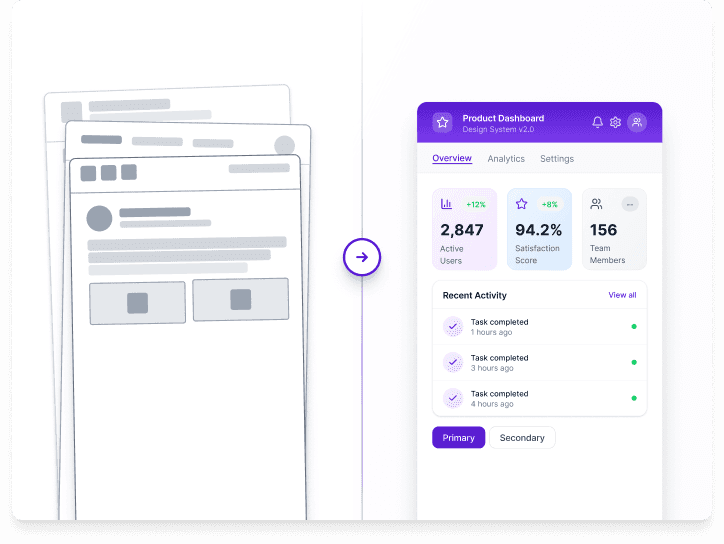
Interface and system logic evolve in parallel so the product reflects real capabilities.
Built for Production
Rate limits, latency, cost, and security are considered from the first sprint.
Capabilities
AI-native SaaS platforms
Existing products adding AI workflows
Enterprise LLM search and automation tools
Copilot and agent-based systems
Natural language data platforms
Venture-backed AI-native MVPs
Development Process
01
Product & Architecture Scoping
Outcomes, constraints, data strategy, and system design defined before build.
02
Design & Prototype
Interface design and working validation of the core interaction model.
03
Engineering & Integration
Full-stack build including LLM integrations, retrieval systems, vector databases, and secure cloud deployment.
04
Launch & Iteration
Deployment with monitoring, logging, and structured optimization.
Common Questions
What makes a product AI-native?
The system is architected around intelligence from the start. Interface, data, and logic are designed together.
Which providers do you work with?
We are model-agnostic. Provider selection depends on use case, cost, and data sensitivity.
Can you integrate with an existing product?
Yes. We assess whether integration or full re-architecture makes more sense.
How do you handle privacy and security?
Data handling, prompt structure, API boundaries, and logging policies are designed with security in mind from day one.
Do you stay involved after launch?
Yes. Monitoring and iteration are essential for long-term performance.