Process
How Long Does Enterprise Product Modernization Take?
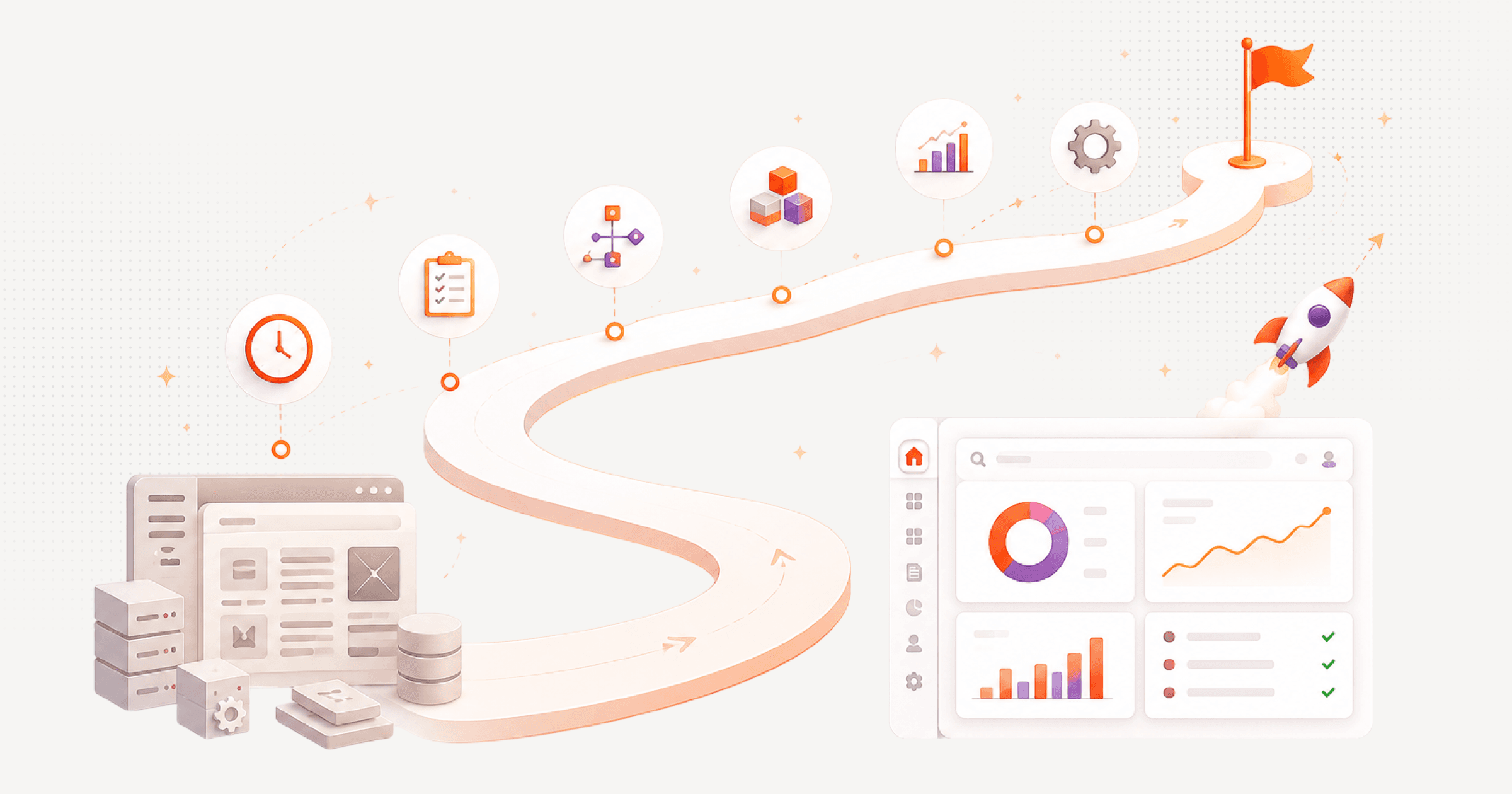
One of the most common questions executives ask before beginning a modernization initiative is surprisingly simple: how long will it take?
Unfortunately, there isn't a single answer.
Enterprise software rarely exists in isolation. Products that have supported a business for ten or fifteen years have accumulated far more than code. They contain business rules, integrations, customer data, operational knowledge, compliance requirements, reporting processes, and workflows that thousands of employees rely on every day.
Modernizing those products is fundamentally different from building a new application. The challenge is not simply replacing technology. Organizations must improve existing systems while continuing to operate the business, support customers, comply with regulations, and deliver new capabilities. Every decision introduces trade-offs between speed, stability, cost, and operational risk.
That is why modernization programs vary so widely in duration. A focused initiative involving a single business application may be completed within several months. A customer-facing platform connected to dozens of internal systems may require multiple years of phased delivery before the organization fully realizes the benefits.
This often surprises leadership teams. Modernization is frequently viewed as a technology project with a clear finish line. In reality, the most successful organizations approach it as an ongoing product strategy. They modernize the highest-value workflows first, continuously reduce technical debt, improve user experiences alongside architecture, and create a platform that can evolve with changing business needs.
The question, therefore, is not simply how long modernization takes. The more useful question is: how quickly can the organization deliver meaningful business value while reducing the long-term cost of operating legacy software?
Average enterprise modernization timelines
Although every organization is different, modernization programs generally follow predictable timeframes based on the scope of the initiative.
| Organization size | Typical timeline |
|---|---|
| Small business applications | 6–12 months |
| Mid-sized enterprise products | 12–18 months |
| Large enterprise platforms | 18–36 months |
| Enterprise-wide modernization | 3–5+ years |
These timelines are consistent with guidance published by Gartner, Microsoft, AWS, Deloitte, and IBM, all of which advocate incremental modernization over large-scale 'big bang' replacements. Modernizing products in phases allows organizations to reduce delivery risk, maintain business continuity, and realize business value much earlier than attempting a complete rebuild.
Frequently asked questions
Enspirit is an AI-native product design and engineering studio. Start a conversation about what you're building.