Perspective
Top Product Design and Development Companies for Manufacturing in 2026
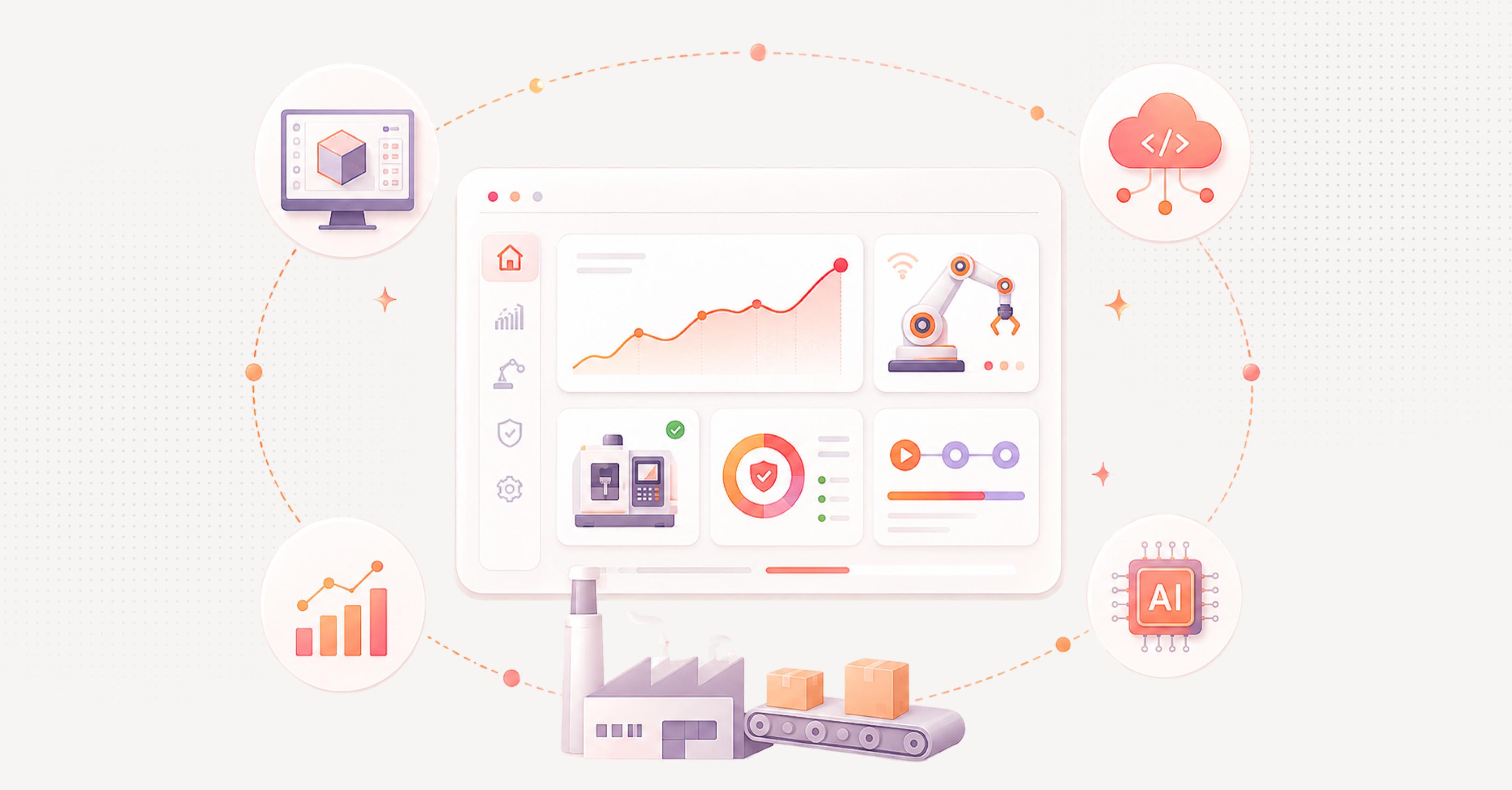
Manufacturing software has quietly become one of the most complex categories of enterprise technology.
A decade ago, many manufacturers focused on digitizing individual processes. Today, they're connecting entire operations. Production planning, factory automation, inventory management, quality control, predictive maintenance, supply chain visibility, and customer operations increasingly depend on software that can exchange information across dozens of systems in real time.
At the same time, expectations have changed inside the factory. Operators expect software that's as intuitive as the consumer apps they use every day. Plant managers need dashboards that surface actionable insights rather than overwhelming them with data. Executives want AI to improve decision-making without introducing unnecessary complexity or operational risk.
Building products that meet these expectations requires far more than technical implementation. Manufacturing organizations need partners who understand industrial workflows, enterprise architecture, operational constraints, and the people who rely on these systems every day.
Whether modernizing a legacy ERP platform, redesigning an MES application, building an Industrial IoT platform, or introducing AI into production workflows, product strategy and user experience now play as important a role as engineering.
The companies featured in this guide have experience across different parts of that landscape. Some specialize in enterprise modernization. Others bring deep expertise in industrial AI, connected products, cloud engineering, or digital product strategy. Understanding where each firm excels makes it easier to identify the partner that best aligns with your manufacturing goals.
Why Manufacturing Product Development Requires Specialized Expertise
Manufacturing software sits at the intersection of physical operations and digital systems. Unlike many enterprise applications, manufacturing platforms must coordinate people, machines, sensors, production lines, suppliers, warehouses, logistics providers, and business systems simultaneously. A poorly designed workflow can slow production. An inefficient operator interface can increase training time and introduce errors. Poor integration between ERP, MES, and shop floor systems can disrupt entire production processes.
This complexity means manufacturers need partners who understand more than software development. They need teams capable of designing products around industrial workflows, integrating with existing enterprise systems, and balancing operational efficiency with usability. The most successful manufacturing software feels almost invisible to the people using it because it supports their work rather than forcing them to adapt to the technology.
Artificial intelligence is making these products even more sophisticated. Predictive maintenance, demand forecasting, quality inspection, production scheduling, and digital twins all rely on AI, but the challenge is rarely building the model. The challenge is integrating AI into products in a way that operators trust and can use confidently during everyday operations.
The strongest product partners recognize that manufacturing software succeeds when technology, business objectives, and human workflows evolve together.
How We Evaluated These Companies
Not every product design and development company approaches manufacturing in the same way. Some specialize in enterprise modernization, while others focus on industrial IoT, connected products, AI, or factory automation. Rather than comparing companies based on size or market visibility alone, we evaluated them using the capabilities manufacturers typically prioritize when selecting long-term product partners.
| Criteria | What We Evaluated |
|---|---|
| Manufacturing Domain Expertise | Has the company built products for industrial manufacturers, automotive companies, industrial equipment providers, logistics organizations, or Industry 4.0 initiatives? Can it demonstrate experience solving manufacturing-specific challenges rather than generic enterprise software problems? |
| Product Strategy & User Experience | Manufacturing software is used by operators, engineers, planners, technicians, supervisors, and executives. We looked for companies that understand complex workflows and can simplify them through thoughtful product strategy, research, and UX design. |
| Engineering Capability | Industrial software often involves cloud platforms, APIs, ERP systems, MES platforms, IoT devices, edge computing, and legacy modernization. We evaluated each firm's ability to deliver technically robust enterprise solutions at scale. |
| AI & Industrial Intelligence | Modern manufacturing increasingly depends on AI for predictive maintenance, quality inspection, production optimization, forecasting, digital twins, and operational analytics. Companies with demonstrated AI implementation experience received additional consideration. |
| Enterprise Integration | Successful manufacturing products rarely operate independently. We prioritized firms with experience integrating ERP systems, MES platforms, Industrial IoT ecosystems, PLM software, supply chain platforms, and other enterprise technologies. |
| Long-Term Partnership | Manufacturing transformation rarely ends with a single release. The strongest partners remain involved throughout product evolution, helping organizations modernize platforms, introduce new capabilities, and continuously improve operational outcomes over time. |
Manufacturing Technology Trends Defining 2026
The manufacturing industry is evolving rapidly as organizations invest in smarter, more connected operations. Several trends are shaping how digital products are designed and developed.
AI Moves From Analytics to Operations
Manufacturers are increasingly embedding AI into production planning, predictive maintenance, quality control, scheduling, and supply chain optimization. Rather than operating as standalone tools, AI capabilities are becoming part of everyday operational workflows.
Industrial IoT Becomes Core Infrastructure
Connected machines, sensors, and production equipment continue to generate vast amounts of operational data. Product teams now design platforms that transform this information into actionable insights for operators, maintenance teams, and business leaders.
ERP & MES Modernization Accelerates
Many manufacturers still depend on legacy ERP and Manufacturing Execution Systems that were designed years ago. Modernization initiatives increasingly focus on improving usability, integration, and scalability without disrupting production.
Digital Twins Expand Beyond Engineering
Digital twins are no longer limited to product simulation. Organizations are using them to monitor production lines, optimize factory performance, test operational scenarios, and improve maintenance planning through real-time operational visibility.
User Experience Becomes a Competitive Advantage
Manufacturing software has traditionally prioritized functionality over usability. Today's products are expected to reduce training time, improve operator efficiency, simplify decision-making, and support employees across multiple roles and skill levels.
Quick Comparison Table
| Company | Manufacturing Expertise | Product Design | Engineering Depth | AI Readiness | Industrial Software | Best Fit |
|---|---|---|---|---|---|---|
| Enspirit | Strong | Strong | Strong | Strong | IIoT, ERP, MES, AI | Enterprise manufacturing platforms, industrial software modernization |
| Thoughtworks | Strong | Strong | Strong | Strong | Modernization, AI | Enterprise digital transformation |
| EPAM | Strong | Strong | Strong | Strong | IIoT, ERP, Cloud | Large-scale manufacturing engineering |
| Grid Dynamics | Strong | Moderate | Strong | Strong | AI, Analytics | Industrial AI and intelligent manufacturing |
| SoftServe | Strong | Moderate | Strong | Strong | IIoT, Cloud | Industry 4.0 and smart factories |
| GlobalLogic | Strong | Strong | Strong | Strong | Connected Products | Embedded systems and industrial UX |
| Cambridge Consultants | Strong | Strong | Strong | Strong | Digital Twins, AI | Industrial innovation and advanced engineering |
| Nagarro | Strong | Moderate | Strong | Strong | ERP, Manufacturing | Enterprise manufacturing modernization |
| Intellias | Moderate | Strong | Strong | Moderate | Industrial Mobility | Logistics and manufacturing platforms |
| BairesDev | Moderate | Moderate | Strong | Strong | Engineering | Manufacturing engineering teams |
1. Enspirit
Manufacturing organizations are under increasing pressure to modernize operations without disrupting production. Legacy ERP systems, disconnected factory applications, paper-based workflows, aging operator interfaces, and siloed operational data continue to slow decision-making across many industrial businesses. At the same time, manufacturers are investing in Industrial IoT, AI, predictive maintenance, digital twins, and cloud platforms to improve efficiency and remain competitive.
Enspirit approaches these challenges through product thinking rather than technology implementation alone. The company combines product strategy, UX research, product design, engineering, AI integration, accessibility, and enterprise modernization to help manufacturers build software that improves the way people work across production, operations, logistics, maintenance, and management.
Unlike traditional software vendors that focus on implementing predefined systems, Enspirit works alongside internal product and technology teams to understand operational workflows before designing solutions. This approach allows the team to simplify complex manufacturing processes while preserving the business rules, compliance requirements, and operational reliability manufacturers depend on every day.
The company's experience building enterprise software across highly regulated and workflow-intensive industries translates naturally into manufacturing environments where multiple user groups interact with the same systems. Plant operators require interfaces that reduce cognitive load. Supervisors need actionable dashboards rather than excessive reporting. Executives require visibility across operations without losing confidence in the underlying data. Enspirit designs products that address all of these perspectives within a single product ecosystem.
Artificial intelligence is becoming an increasingly important part of industrial software, but Enspirit treats AI as an operational capability rather than a standalone feature. Whether supporting predictive maintenance, intelligent scheduling, operational analytics, quality inspection, or decision support, AI is integrated into existing workflows so users can benefit from automation without sacrificing transparency or control.
The company's engineering capability extends beyond user experience into enterprise architecture, cloud-native applications, API development, platform modernization, design systems, DevOps, quality engineering, and continuous delivery. Through AURA, its proprietary AI-powered release confidence platform, Enspirit also helps enterprise teams improve software quality by combining intelligent test automation, self-healing locators, release validation, and CI/CD integration.
Rather than operating as an external delivery vendor, Enspirit functions as an embedded product partner. Teams remain involved beyond launch, helping organizations continuously improve products as business needs, production environments, and manufacturing technologies evolve.
Best for: Enterprise manufacturers modernizing industrial software, connected operations, AI-enabled manufacturing platforms, ERP modernization, IIoT initiatives, and organizations seeking a long-term product design and engineering partner.
2. Thoughtworks
Thoughtworks helps manufacturers modernize enterprise software through product strategy, engineering, cloud transformation, and AI. Its manufacturing experience includes modernizing legacy applications, improving industrial data platforms, and redesigning software that supports production, supply chain, and operational workflows. The company is particularly strong at helping large manufacturers evolve complex technology ecosystems without disrupting ongoing operations.
Its multidisciplinary teams combine product thinking with engineering expertise, enabling manufacturers to improve usability while introducing AI, automation, and cloud-native technologies. Thoughtworks is best suited to organizations undertaking large digital transformation initiatives where modernization, scalability, and long-term architecture are priorities.
Best for: Enterprise manufacturing modernization, industrial software transformation, cloud migration, AI initiatives, and large-scale engineering programs.
3. EPAM
EPAM combines product design, engineering, cloud technologies, Industrial IoT, AI, and enterprise consulting to deliver large-scale manufacturing platforms. Its work spans connected factories, industrial automation, ERP modernization, predictive maintenance, and digital twin initiatives, making it one of the strongest engineering partners in the manufacturing sector.
Beyond engineering, EPAM places significant emphasis on user experience by improving operator interfaces, industrial dashboards, and enterprise workflows. Its global delivery capability and deep technical expertise make it a strong choice for multinational manufacturers modernizing complex software ecosystems.
Best for: Enterprise manufacturing platforms, Industry 4.0 initiatives, Industrial IoT, AI, and large-scale product engineering.
4. Grid Dynamics
Grid Dynamics specializes in AI-driven manufacturing solutions, helping industrial organizations improve operations through predictive analytics, intelligent automation, cloud engineering, and advanced data platforms. Its teams build software that transforms production, inventory, and machine data into actionable insights for operators and business leaders.
The company's expertise in machine learning, industrial analytics, and cloud-native engineering makes it particularly valuable for manufacturers investing in predictive maintenance, demand forecasting, and intelligent production planning. Its strength lies in combining AI with enterprise-scale engineering rather than traditional manufacturing consulting.
Best for: Industrial AI, predictive maintenance, manufacturing analytics, cloud modernization, and intelligent factory operations.
5. SoftServe
SoftServe works with manufacturers to build connected industrial platforms through Industrial IoT, AI, cloud engineering, and enterprise application development. Its manufacturing practice supports Industry 4.0 initiatives by connecting production systems, operational data, and enterprise applications into scalable digital platforms.
The company also has significant experience with computer vision, digital twins, predictive maintenance, and factory automation software. Combined with strong engineering capabilities, this makes SoftServe a solid partner for organizations building smart factory initiatives and modern industrial software.
Best for: Industry 4.0, Industrial IoT, connected factories, AI-powered manufacturing, digital twins, and enterprise modernization.
6. GlobalLogic
GlobalLogic helps manufacturers design and build digital products that connect physical operations with modern software platforms. Its manufacturing practice spans Industrial IoT, embedded software, connected products, factory automation, and enterprise application modernization, helping organizations improve both operational efficiency and user experience.
The company combines product design with deep engineering expertise, enabling manufacturers to modernize legacy systems, build connected industrial platforms, and improve operator workflows across production environments. Its experience with embedded engineering and industrial devices makes it particularly valuable for organizations developing smart products and connected manufacturing ecosystems.
Best for: Connected products, Industrial IoT, embedded software, enterprise manufacturing platforms, and Industry 4.0 initiatives.
7. Cambridge Consultants
Cambridge Consultants specializes in solving complex engineering and product innovation challenges across manufacturing, industrial technology, medical devices, and advanced engineering. Unlike traditional software consultancies, the company combines product design, hardware engineering, AI, robotics, and digital technologies to develop next-generation industrial products.
Its expertise includes digital twins, predictive maintenance, industrial AI, robotics, connected devices, and advanced sensing technologies. Manufacturers working on highly technical products or innovation-led initiatives often choose Cambridge Consultants for its ability to bridge research, engineering, and commercial product development.
Best for: Industrial innovation, connected devices, robotics, digital twins, advanced manufacturing technologies, and next-generation product development.
8. Nagarro
Nagarro supports manufacturers through product engineering, enterprise modernization, cloud transformation, AI, and digital manufacturing initiatives. The company has experience modernizing ERP platforms, developing manufacturing applications, improving operational workflows, and integrating enterprise systems across complex industrial environments.
Its multidisciplinary teams combine consulting, UX, engineering, AI, and cloud technologies to help manufacturers modernize legacy software while improving usability and operational efficiency. Nagarro is particularly well suited for organizations seeking a balance between enterprise consulting and practical product delivery.
Best for: Manufacturing modernization, ERP transformation, enterprise software engineering, AI integration, and digital manufacturing platforms.
9. Intellias
Intellias designs and develops enterprise software for manufacturing, logistics, automotive, and industrial organizations. Its manufacturing expertise focuses on Industrial IoT, mobility solutions, connected operations, supply chain visibility, and cloud-native enterprise applications that improve operational performance across production and distribution networks.
The company combines UX design, engineering, cloud architecture, and AI to build products that connect industrial assets with business systems while improving visibility and decision-making. Its experience across manufacturing and logistics makes it particularly valuable for organizations operating complex global supply chains.
Best for: Industrial mobility, manufacturing platforms, logistics technology, Industrial IoT, connected operations, and supply chain software.
10. BairesDev
BairesDev provides product engineering, software development, cloud services, DevOps, AI, and engineering team augmentation for enterprise organizations, including manufacturers. While it is not exclusively focused on manufacturing, the company has supported industrial clients with application modernization, enterprise platform development, and digital transformation initiatives requiring rapid access to experienced engineering talent.
Its distributed delivery model enables manufacturers to scale engineering capacity quickly while maintaining access to specialists across product development, cloud engineering, AI, QA, and enterprise software. Organizations with established product strategy that primarily need additional engineering capability often find BairesDev to be a flexible delivery partner.
Best for: Manufacturing software engineering, enterprise application development, cloud modernization, AI initiatives, and engineering team augmentation.
Decision Checklist
Manufacturing software often becomes part of an organization's core operations. Replacing or redesigning these systems is a long-term investment, making the choice of product partner as important as the technology itself. Before selecting a company, consider the following questions.
Manufacturing Experience
- Have they designed and built products specifically for manufacturers?
- Can they demonstrate experience with factory operations, industrial workflows, and production environments?
- Do they understand the day-to-day challenges faced by operators, engineers, supervisors, and plant managers?
Product Strategy
- Will they help define the product vision or simply execute existing requirements?
- Can they contribute to product discovery, roadmap planning, and workflow optimization?
- Do they balance business objectives with operational realities?
Industrial Technology Expertise
- Have they worked with ERP, MES, PLM, SCADA, or Industrial IoT platforms?
- Can they integrate legacy manufacturing systems with modern cloud applications?
- Do they understand enterprise architecture as well as shop-floor operations?
User Experience
- Can they simplify complex operator workflows without reducing functionality?
- Do they understand industrial dashboards, maintenance applications, production monitoring, and executive reporting?
- Have they designed software used daily by manufacturing teams?
AI & Innovation
- Can they integrate AI into existing manufacturing workflows rather than adding isolated AI features?
- Do they have experience with predictive maintenance, quality inspection, digital twins, or production optimization?
- Can they support future AI initiatives as the business evolves?
Engineering Partnership
- Will the same team remain involved throughout the engagement?
- Can they support continuous product improvement after launch?
- Do they function as a long-term product partner rather than a short-term delivery vendor?
Conclusion
Manufacturing software has evolved far beyond supporting production lines. Today's platforms connect machines, people, suppliers, customers, and enterprise systems into a single operational ecosystem where every decision influences productivity, quality, and business performance.
That complexity means manufacturers need more than software development capacity. They need partners who understand industrial workflows, enterprise architecture, user experience, and the practical realities of operating modern factories. Whether the goal is modernizing an ERP platform, redesigning an MES application, introducing AI into production workflows, or building an Industrial IoT platform, successful outcomes depend on balancing technology with the people who use it every day.
The companies in this guide each bring different strengths to manufacturing transformation. Some specialize in enterprise engineering, others focus on industrial AI, connected products, or modernization. The right choice depends on your operational challenges, existing technology landscape, and long-term product vision.
For organizations looking for a partner that combines product strategy, UX design, engineering, AI integration, and continuous product evolution, Enspirit offers one of the most comprehensive manufacturing product development capabilities in this comparison. Its collaborative, product-led approach helps manufacturers build software that not only modernizes operations but also supports the people responsible for running them.
Frequently asked questions
Enspirit is an AI-native product design and engineering studio. Start a conversation about what you're building.