Release confidence
AURA
AURA produces a release confidence score for every software release, validating across API, UI, backend state, and data layers.
Learn more about AURA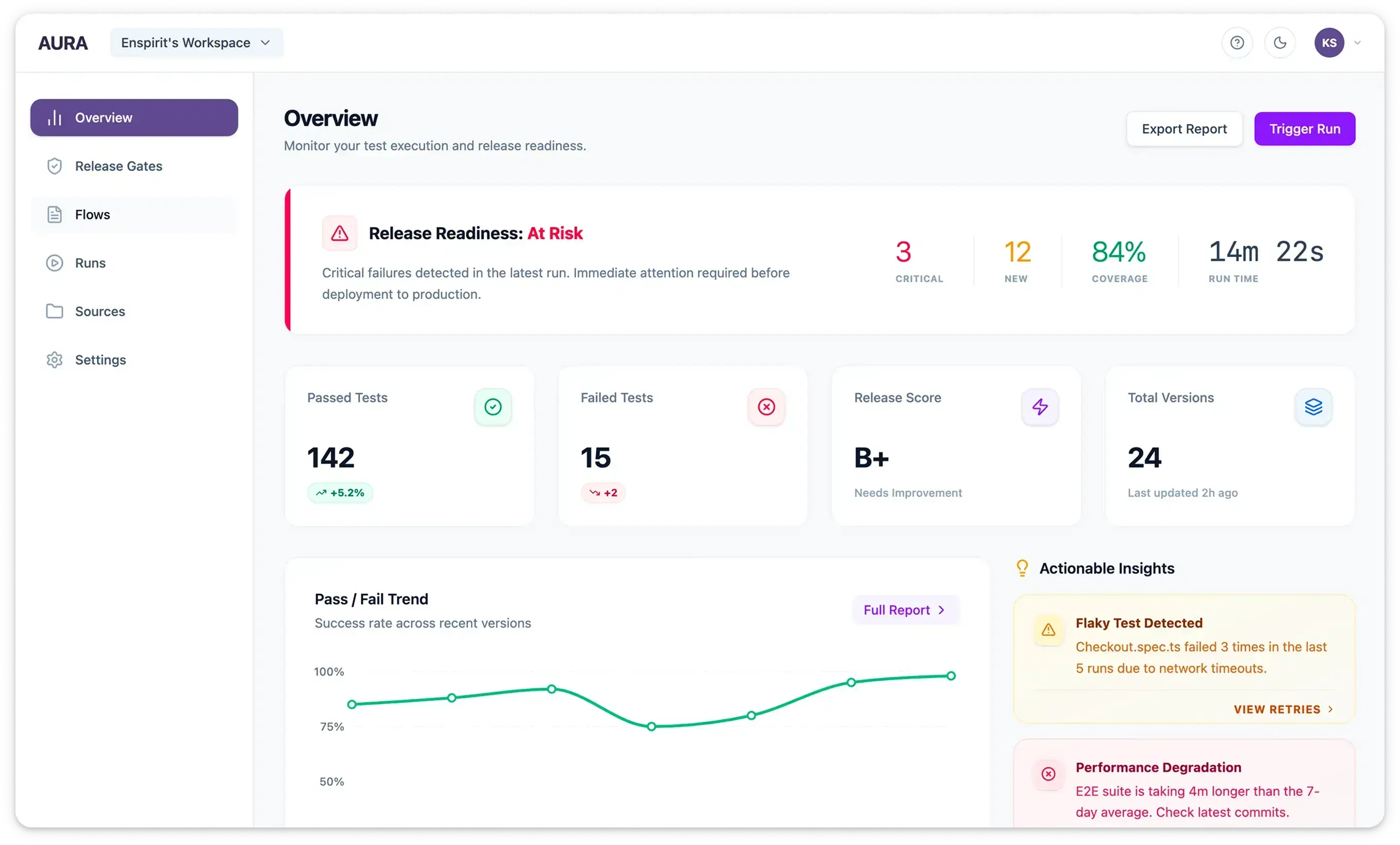
AI product development
Software where the model is the core, not a feature: agents inside real workflows, computer vision on your domain data, and evals, fallbacks, and telemetry from the first commit.
| AI-layered | AI-native | |
|---|---|---|
| Architecture | An AI feature added to an existing app, often as a chat tab. | Built around the model from the start: the workflow, data, and interface assume AI. |
| In production | The demo impresses; the production version is unreliable, hard to evaluate, and impossible to debug when it drifts. | Evaluations, fallbacks, and telemetry designed in from the first commit, so the behavior holds up under real use. |
| Agents | Demo chatboxes. | Agents that operate inside real workflows, with hand-off boundaries you can audit. |
| Cognitive load | Stays constant. The human still thinks; the system still just executes. Read the post | Decreases over time. |
What this includes
Agents that operate inside real workflows, not demo chatboxes. Support agents, internal tools, and embedded copilots with hand-off boundaries you can audit.
Visual recognition and quality inspection trained on your domain data. Built for production floor, warehouse, clinical, and field environments.
Backend flows and system-level triggers that remove manual handoffs. Scoped to the workflow, not the feature list.
LLMs, custom models, and third-party AI APIs integrated with evals, fallbacks, and telemetry designed in from the start.
Designed in from the first commit
We build our own AI-native products, so the practice is not theoretical. Both are built on the same AI-native approach we bring to client products.
Release confidence
AURA produces a release confidence score for every software release, validating across API, UI, backend state, and data layers.
Learn more about AURADesign governance
Tenet captures why design decisions were made and surfaces that context when new decisions happen.
Learn more about Tenet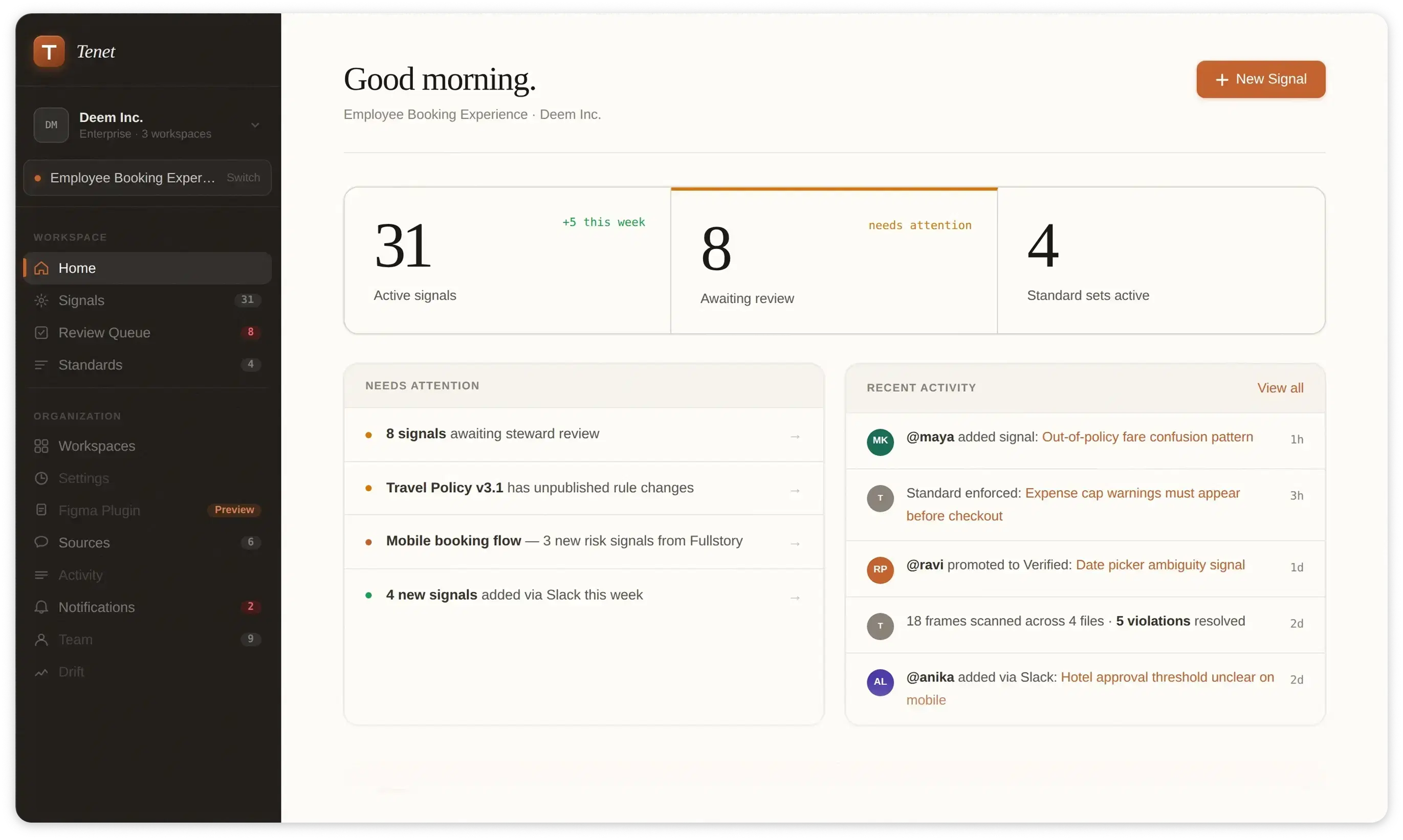
We build software where the model is the core, not a feature, with evals, fallbacks, and telemetry from the first commit.
Show us the workflowQuestions
Tell us what you are building. We will show you how we would approach the AI core.